
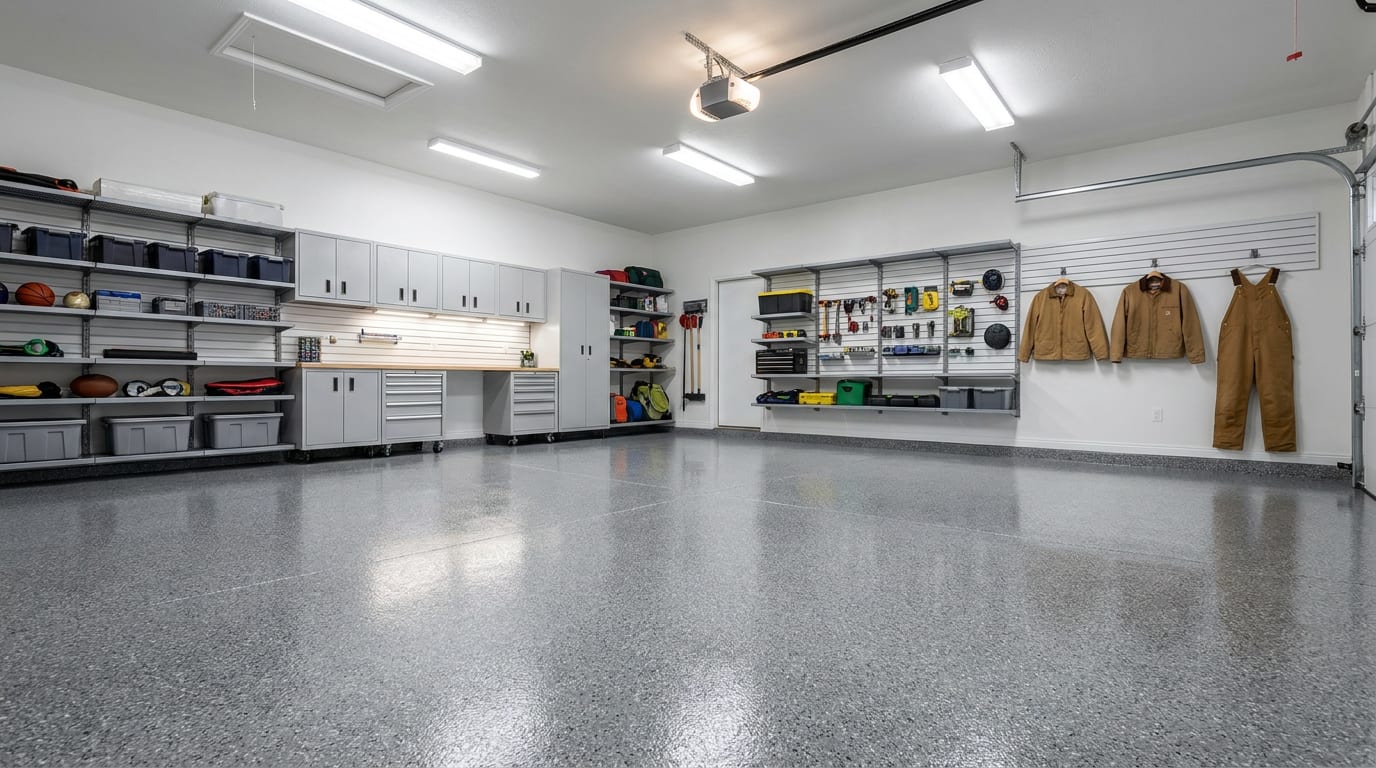
· by Michael Blair, Nashville's Garage Floor
Garage storage carries heavy, awkward loads in a space with a hot summer and a concrete floor. What fails, fails because of the fixing rather than the product.
Fix into framing, always
Garage walls are usually drywall over studs, and no drywall anchor is appropriate for shelving carrying real weight. Locate studs and fix into them.
Overhead racks must go into ceiling joists, correctly spanned and with the specified fasteners. A rack pulled out of a ceiling is a serious event.
Know the rating and respect it
Overhead racks carry a stated capacity that assumes correct installation into framing at the specified spacing. Loading beyond it, or into the wrong members, is how they fail.
Distribute weight rather than concentrating it, and keep the heaviest items low rather than overhead.
- Locate and fix into studs and joists, never drywall alone
- Respect the rated capacity of overhead racks
- Heaviest items low, lightest overhead
- Keep the water heater and furnace areas clear
- Nothing flammable near an ignition source
Heat is a real factor here
A Middle Tennessee garage gets very hot in summer. Paint, adhesives, aerosols, batteries and some foods degrade or become hazardous stored there.
Anything with a temperature range on the label is worth reading before it lives in the garage year-round.
Plan around the car doors
The most common planning error is shelving that prevents a car door opening fully. Measure with the vehicle in place and the doors open before fixing anything.
Wall-mounted systems that keep the floor clear also make the floor far easier to clean and coat later.