
· by Michael Blair, Nashville's Garage Floor
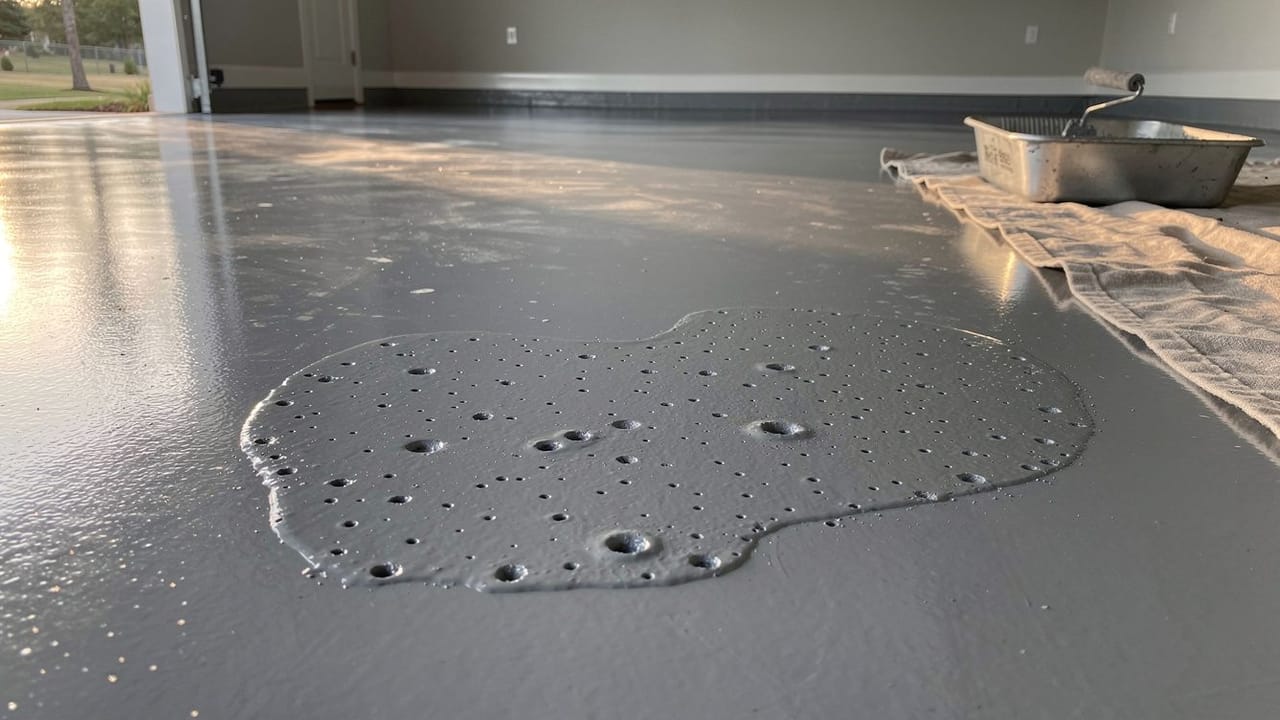
A garage floor can be pitted before any coating goes down, with small holes and rough patches in the concrete itself, or it can turn up pitted a day after the coating, with pinholes and tiny craters in a finish that went down smooth. The two problems are related. Concrete is full of tiny pores and the air in them moves, and a coating laid over an unfilled, unsealed slab at the wrong time of day traps that air. Here is what the coating makers say causes it, what we fill and prime first on an epoxy floor, and how a floor that already has pinholes is repaired.
Why does my garage floor coating have pinholes?
Pinholes in a garage floor coating are most often air that came up out of the concrete while the coating was still wet, a process called outgassing. Euclid Chemical’s article on preventing outgassing defects, written by the concrete products maker in 2021, explains that concrete is porous by nature and that the air in it expands and moves through the pores as temperature and air pressure change. When that air reaches the surface under a liquid coating, it leaves a pinhole. Euclid also notes the defects rarely cover a whole floor and tend to bunch up where the sun hits, where prep was rougher, or where air moves across the slab.
Sika’s Traffic Membrane Troubleshooting Manual, from May 2019, is written for polyurethane membranes on parking decks and balconies rather than garage floors, but it describes the same thing: bubbles that pop and leave small craters. Its list of causes includes porous concrete, too little primer, aggressive surface prep, a damp slab, a slab at 90°F or warmer, and direct sun on the fresh coat. Pinholes can also come from oil, soap or dust left on the slab, or from mixing and rolling, which our post on coating a garage floor in cold weather covers.
How do you fix a pitted concrete garage floor before coating?
A pitted concrete garage floor is fixed by removing the weak surface and filling the holes before any coating goes on. Sika’s surface preparation guide for its resinous floors asks for concrete that is sound, clean, dry and free of contaminants, and says weak or deteriorated concrete has to come off down to sound material. It lists detergent scrubbing, low-pressure water under 5,000 psi or steam to clean the slab before profiling, and repair mortars and skim coats for patching.
Sherwin-Williams makes the same point about holes in its concrete surface preparation guide, which is written for water and wastewater structures rather than garages. Bugholes, voids, spalls, cracks and worn joints all get repaired before the polymer coating goes on, with the repair material chosen by how thick a fill it takes to bring the surface back to plane, and deep repairs built up in more than one layer. On a garage slab that is the work on our grinding and repair page, and cracks have their own post on fixing garage floor cracks before coating.
Does a garage floor coating need a primer?
A garage floor coating needs a primer on most slabs, because the primer is what seals the pores the air comes out of. Euclid’s article calls for a low-viscosity, deeply penetrating primer after the surface is prepared, and Sika’s troubleshooting manual strongly recommends two coats of primer when the concrete is very porous or rough. Euclid adds that pinholes show more in thick, 100 percent solids systems, because a bubble has a harder time working its way out through a thick film.
Timing matters as much as the primer. Euclid treats a rising surface temperature as a strong sign that outgassing is coming, and suggests coating in the evening as the air cools; Sika’s manual suggests afternoons or evenings once temperatures are falling, and a spike roller to pop bubbles as soon as they appear. Both say to keep moving air off the slab while it cures. In a garage that means the door closed and the sun off the floor, and no heater or fan blowing across it. Every product’s own data sheet sets its limits, and we work to that sheet.
How do you repair an epoxy garage floor with pinholes?
An epoxy garage floor with pinholes is repaired by recoating it with the same material after the surface is sanded. Euclid notes that touching up only the affected spots tends to leave a patchy look, so a full recoat may be the better answer. Sika’s troubleshooting manual describes the steps: grind or sand the affected areas flat, put down a primer lightly broadcast with dry silica sand, clean the floor, and reapply the base coat or the whole system.
Because the defects tend to cluster, we look at where they are before deciding how much floor to redo. The fix has to deal with the cause, or the recoat will pinhole again. If your floor in Nashville or nearby is pitted or a new coating has come up full of pinholes, send us a few photos, and we will tell you what the slab needs before it is coated or recoated.
Sources
- Euclid Chemical, How to Prevent Coating Defects Caused by Concrete Outgassing (Jennifer Mizer, March 24, 2021) — Air moving through porous concrete with temperature and pressure; rising surface temperature; evening application; moving air; thicker 100 percent solids films; defects clustering; low-viscosity penetrating primer; repair by recoating with the same material; contamination and application causes
- Sika USA, Traffic Membrane Troubleshooting Manual (May 2019) — Written for polyurethane traffic membranes on parking decks and balconies, not garage floors: pinholing from outgassing, its causes, two primer coats on porous concrete, afternoon or evening application, spike rolling, and the grind, prime and recoat repair
- Sika USA, Surface Preparation Guide — For resinous flooring: sound, clean, dry substrate; weak concrete removed to sound; cleaning methods including water under 5,000 psi; repair mortars and skim coats
- Sherwin-Williams Protective & Marine, Water & Wastewater Concrete Surface Preparation Guide — Written for water and wastewater structures, not garages: bugholes, voids, spalls and cracks repaired before the polymer system; repair material chosen by thickness; deep repairs in lifts
FAQ
Pitted Garage Floors and Pinholes in a Coating — questions
Can you epoxy a pitted garage floor?
Yes, once the pits are dealt with. Weak or deteriorated concrete is ground off to sound material, and bugholes, voids and spalls are filled with a repair mortar suited to their depth. The slab is then sealed with a penetrating primer, two coats if it is very porous, so air in the pores does not pinhole the coating.
What is concrete outgassing?
Outgassing is air escaping from the pores of concrete. As a slab warms or the air pressure changes, the air in it expands and moves up to the surface. Under a wet coating it forms bubbles that pop and leave pinholes or small craters, which is why primer and the time of day both matter.
What time of day should a garage floor coating be applied?
Late in the day, once the slab has stopped warming. Euclid Chemical treats a rising surface temperature as a strong sign of outgassing and suggests evening application, and Sika suggests afternoons or evenings as temperatures fall. Keep direct sun off the slab and keep heaters and fans from blowing across it while it cures.
Can you re-coat an epoxy garage floor?
Yes. Sika’s troubleshooting manual has the affected areas ground or sanded flat, primed with a lightly sanded primer, cleaned and recoated with the base coat or the whole system. Euclid says the repair uses the same material, and that patching only the bad spots tends to look patchy, so a full recoat is often better.